Xunta de Galicia continues to support our group

We are proud to announce that the Xunta de Galicia continues to support the Genomics and Biomedicine Group (GXB) at the University of Vigo as a Competitive Reference Group within the Center for Biomedical Research (CINBIO), a Singular Research Center recognized by the Galician Government.

This continued support enables us to advance our research in three key areas: disease and pathogen genomics, molecular biology applied to biomedicine, and nanomaterials in biomedicine.

We are grateful for this ongoing commitment, which strengthens our ability to pursue cutting-edge research with real impact on health and disease.

TALENTGAL (MSCA-COFUND) 40 postdoctoral fellowships

🧬 Excited about biomedical research? Come work with us!

🚀 TALENTGAL (MSCA-COFUND) has 40 postdoc fellowships open NOW — 30 months, fully funded, interdisciplinary!

📍 3 potential positions at CINBIO.
• Molecular & Immune Mechanisms in Precision Oncology
• AI-driven Biomedical Data Analysis
• Multiomic Approaches for Next-Gen Therapeutics

📅 Deadline: July 23, 2026

Who Can Apply

Applicants must meet the following criteria:

  • PhD obtained within the last 8 years before the deadline
  • Mobility rule: must not have lived/worked mainly in Spain for more than 12 months in the last 36 months
  • Publications: at least two peer-reviewed papers, with one as first or corresponding author
  • Open to all nationalities and ages 

How to Apply

New Grant: Cancer Evolution Research

🏆

We’ve just secured funding from the Spanish Ministry of Science for our project: “Genomic and Transcriptomic Drivers of Adaptation in Cancer Evolution.” Cancer cells can develop traits such as rapid growth, immune evasion, and drug resistance—not only through DNA mutations but also by altering gene expression. Using single‑cell DNA and RNA sequencing, we’re exploring how tumor cell lineages adapt to new environments, focusing on papillary thyroid and colorectal cancers. Our goal: uncover how phenotypic plasticity and heritable changes fuel cancer progression, paving the way for better diagnosis and therapy

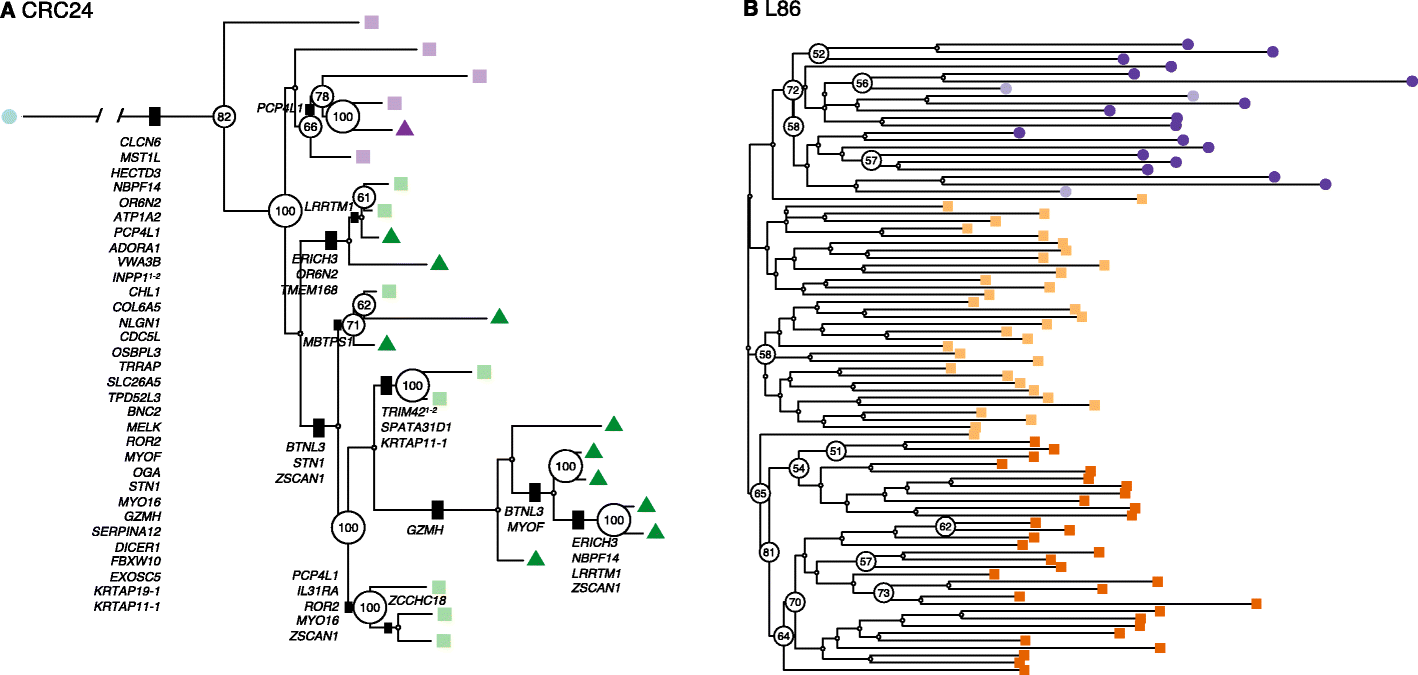
phylogenetic origins of relapse using single-cell data

Our phylogenetic analysis of single cells exposes how, where and when malignant cells survive treatment in a personalized manner in a liver relapse of a CRC metastasis. We show that the relapse originated from the expansion of a single metastatic lineage that slowly evolved in the liver. Interestingly, there is a clear contribution of chemotherapy exposure to the overall mutational burden of the relapse

https://www.sciencedirect.com/science/article/pii/S0304383522002518

AECC grant: Microbiome as biomarker for CRC

We want to thank the Spanish Cancer Association (AECC) for awarding us a research grant to study the role of the microbiome (virus and bacteria) as non-invasive biomarkers for the detection of premalignant lesions and colorectal cancer. Anonymous people have donated this money; much gratitude and tons of responsibility.